
WEDDINGS BY MARK · PRACTICAL WEDDING PLANNING
Autumn & winter wedding photo timings
Beautiful light, a warm indoor backup and time to enjoy your guests. Here’s how we plan around the shorter days.

The short answer: check sunset for your wedding date and venue before fixing the timetable. Leave a comfortable daylight window after the ceremony for congratulations, the family photographs you want and a little time together. Plan an indoor alternative too. After-dark photographs can then be a lovely extra, rather than a rescue mission.
The clocks change. The plan needs to change with them.
A winter wedding can be gorgeous. Earlier darkness gives you candlelight, cosy rooms and an evening atmosphere that summer couples have to wait hours for. The part worth sorting early is the daylight.
In the UK, the clocks go back on 25 October 2026, 31 October 2027 and 29 October 2028. Sunset then appears an hour earlier on the clock than it would under British Summer Time. The days are also getting shorter as winter approaches. The official UK clock-change dates are worth checking when you plan.
That does not mean copying someone else’s November timings onto your December wedding. Your date, venue and ceremony length all matter. Trees, hills and nearby buildings can take the useful light from a portrait spot before the published sunset time.
Start with the light, then work back to your ceremony.
Once you have your date and venue, check the local sunset time and ask your venue coordinator how long the ceremony and changeover usually take. Then we can work out where the photographs fit without turning the day into a race.
I would look at four things with you:
- The ceremony finish: allow for your actual ceremony, including readings, congratulations and any travel between venues.
- What matters in daylight: perhaps a particular view, confetti outside or photographs with older relatives.
- Your couple photographs: a relaxed window together, with a little room for video clips if your package includes them.
- A useful buffer: time for a late arrival, a shower passing through or someone needing a few extra minutes.
You do not need to spend the whole afternoon outside. We need a sensible place for the photographs you care about, with enough flexibility to enjoy taking them.

An example winter wedding photo timeline
This is an illustration, not a sunset forecast. It assumes one venue, a ceremony lasting about 30 minutes and a checked local sunset around 4:15pm. Your own plan needs to use the light at your venue on your actual date.
| Time | What happens |
|---|---|
| 1:30pm | Ceremony begins. |
| 2:00–2:20pm | Congratulations, hugs and confetti, if planned. |
| 2:20–2:40pm | The agreed family photographs, with everyone nearby. |
| 2:40–3:00pm | Relaxed couple photographs and short video clips where included. |
| From 3:00pm | Back to your guests, with some flexibility before the meal. |
| Around 3:45pm | Wedding breakfast, agreed with your venue and caterer. |
| After dark | Evening celebrations and an optional short portrait break. |
These are planning windows, not guaranteed completion times. Larger groups, travel, accessibility needs and longer ceremonies need more room. For the actual combinations and organisation, use my family wedding photograph guide; there is no need to squeeze a second version of that list into your timetable.
A later ceremony can still work.
If your ceremony is already booked for later in the afternoon, tell me before worrying that everything needs moving. We can prioritise the outdoor photographs that matter most, look at indoor spots and agree what can comfortably happen after dark.
If you are happy seeing one another before the ceremony, a few earlier couple photographs may be an option. If you want that first look to happen at the aisle, we plan around that instead. You should not feel pushed into changing a meaningful part of your wedding for a photograph.
Where the ceremony and reception are in different places, include the journey, parking and the time it takes everyone to gather again. A ten-minute drive rarely means only ten minutes disappear from the timetable.
Rain needs a backup, not a panic.
At your venue visit, look for a room or sheltered spot with enough space for the people you want photographed. Ask when it will be available: the ceremony room may need turning around, and the lovely staircase may also be a busy route between rooms.
For couple photographs, a window, doorway or interesting interior can work beautifully. For family groups, space and accessibility often matter more than finding the fanciest background.
We can watch for a break in the weather and take a short trip outside if it feels comfortable. There is no requirement to stand shivering in the rain to prove you had an autumn wedding.

Darkness brings a different kind of photograph.
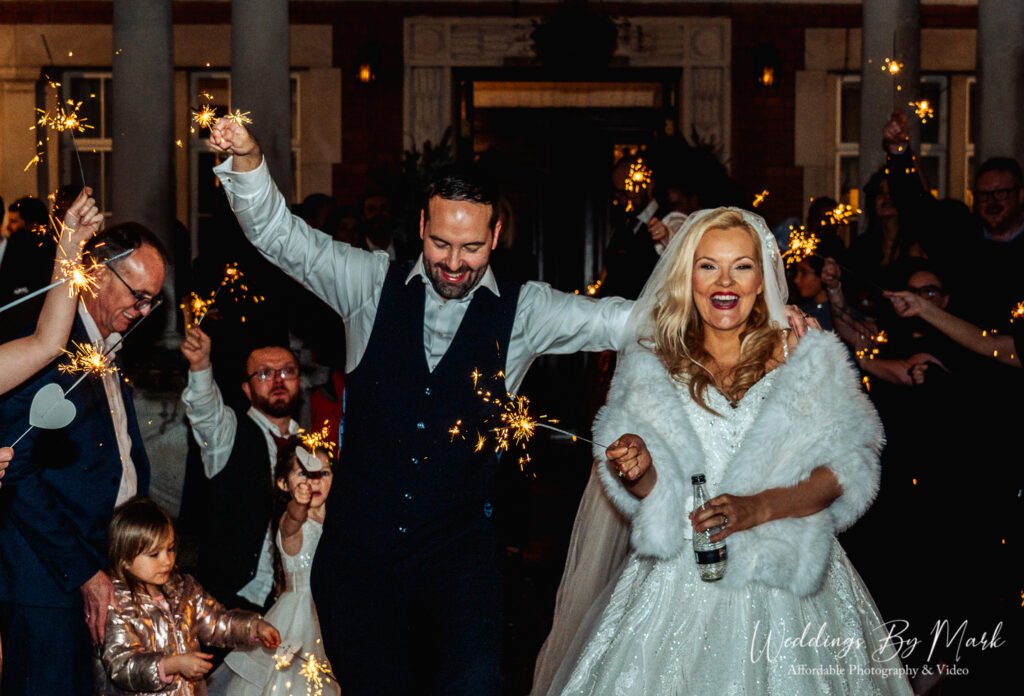
Daylight portraits and evening portraits have different possibilities. After dark, a lit entrance, the atmosphere of your reception room or a carefully lit photograph outside can give you something you would not get at midday.
Any sparkler photograph needs the venue’s permission, a suitable space and sensible coordination. It is an option to discuss, not an essential ingredient for every winter wedding.
If you would like an evening portrait, we can look for a quiet gap in the celebrations. You can have the photograph and get back inside while your drink still remembers who you are.
Put the agreed plan somewhere you can both find it.
Keep one current timetable with your ceremony, journeys, meal and evening plans. Share it with the venue and the suppliers who need it, then make sure everyone has the same version.
My wedding planner app is included free with every full-day package. You can keep your checklist, suppliers, budget and payment dates together and plan with your partner. It is a useful home for the planning around your day; we will still agree your photography timings personally.
You can see how the booking, planning and gallery experience fit together in your wedding journey. For a real example of a winter celebration, have a look at Maria and Jonny’s Eaves Hall wedding.
A few questions couples ask
What time should a winter wedding ceremony start?
There is no single right time. Start with the sunset for your date and venue, then allow for the ceremony, congratulations, travel and the photographs you want in daylight. An earlier ceremony generally gives you more flexibility, but a later one can still work with a different plan.
Can we still have lovely photographs if it is dark or raining?
Yes. Indoor portraits and after-dark photographs can be part of a beautiful gallery. They will look different from daylight photographs, so the useful conversation is about which backgrounds and moments matter to you and what your venue can offer.
Do we need a separate long break for photo and video?
We plan the couple photographs and short highlight clips together where your package includes both. The amount of time depends on what you want, the available light and the venue. I will help you choose a comfortable window rather than promise every wedding fits the same number of minutes.
Does the clock change affect our actual wedding date?
It depends on the date. The autumn change happens on the last Sunday in October. Check the correct year and use local times consistently when sharing your timetable with the venue and suppliers.
Your day, your way. With a little daylight planning.
If you are planning an autumn or winter wedding in Manchester, Cheshire, Lancashire or elsewhere across the North West, send me your date, venue and ceremony time if you know it. I will help you see where the photographs can fit.
Taking bookings for 2027, 2028 and 2029. You can read my photography and photo and video package details before getting in touch.
Clock-change dates checked against GOV.UK on 18 October 2026. Example timings are illustrative and must be adapted to your venue, date and wedding plans.